Cloud Infrastructure
Cloud infrastructure refers to the hardware and software components—such as servers, storage, networking, virtualization, and services—that are delivered to users over the internet (the “cloud”). Instead of investing in and maintaining physical IT systems on-premises, businesses can access computing resources on-demand via public, private, or hybrid cloud platforms. But what are the benefits of building your online presence, or transferring your current business to a cloud-based solution?
AWS Well-Architected Framework

Operational Excellence
Continually improve processes and procedures through monitoring, automation, and evolution of operations.

Security
Protect information and systems using risk assessments, encryption, and identity management best practices.

Reliability
Ensure workloads perform intended functions correctly and consistently, and recover quickly from failure.

Performance Efficiency
Use computing resources efficiently and adjust as demand changes using scalable architecture and innovation.

Cost Optimization
Avoid unnecessary costs by understanding where money is spent, and optimizing resource allocation accordingly.

Sustainability
Minimize environmental impact through efficient infrastructure design, usage tracking, and shared responsibility.
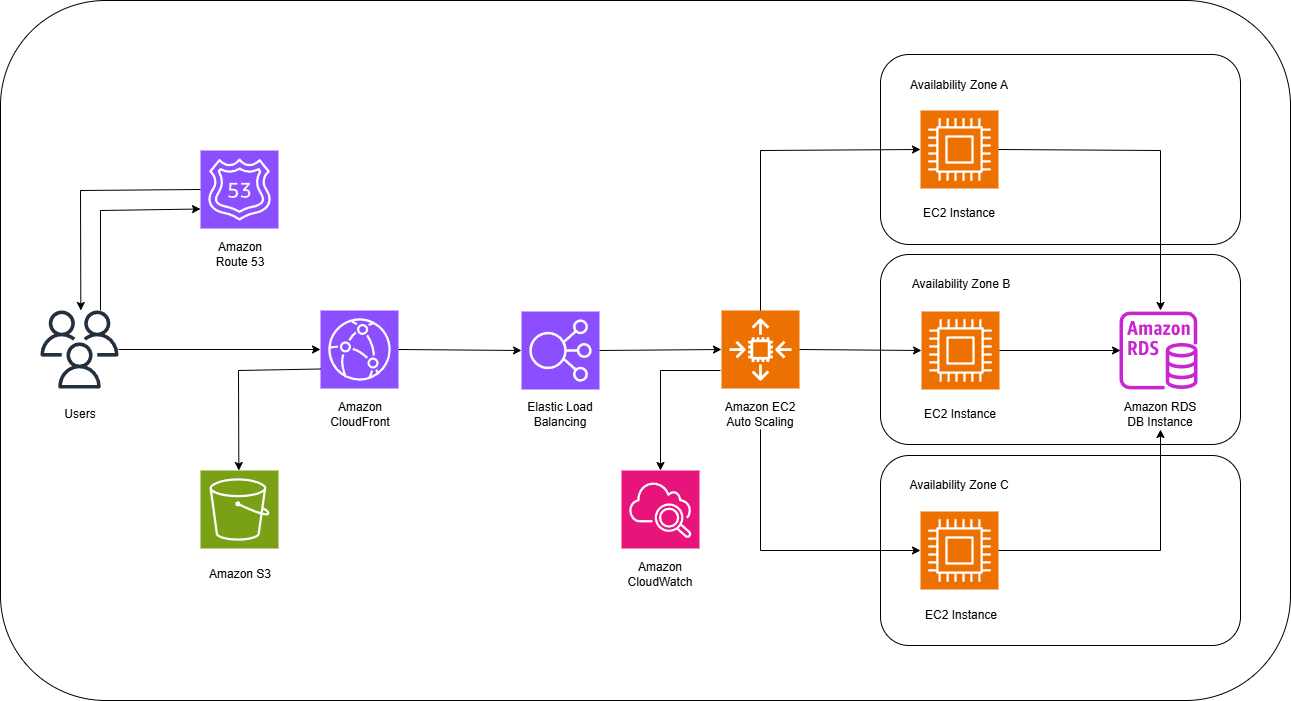
Example: Highly Available Web Architecture